Incorrect body language, talking to an officer now results in "pain compliance"
PRISONPLANET.COM
Ex-NFL player Timothy Worley was tasered by Georgia police for "becoming confrontational" at a traffic stop according to news reports, but the video shows that the extent of Worley's aggression was merely pointing at the cop and raising his voice.
After Worley exits the vehicle and appears calm, the cowardly officer accuses him of "making fists" when Worley is doing no more than crossing his arms. Apparently, incorrect body language is now an offence that justifies "pain compliance" correction by means of a Tasering.
Worley even puts his palms together in a prayer-like pose in an attempt to reassure the officer he is calm but that is not good enough, after Worley points at the cop for half a second, the officer then approaches Worley who backs away but is then Tasered.
What should Worley's correct body language have been to have avoided 50,000 volts shooting through his body? Should he have kneeled and licked the officer's boots while he was being lectured?
Why are police being trained that simply talking to cops or pointing a finger is evidence of an imminent physical threat?
Friday, April 18, 2008
Ex-NFL Player Tasered For Pointing At Cop

Thursday, April 17, 2008
Wednesday, April 16, 2008
Homosexuality Explained in 17min.
Is homosexuality genetic, or is it something people choose? What if it's neither! Dr. Julie Harren, a Licensed Marriage and Family ... all » Therapist in private practice in Palm Beach, Florida, discusses the meaning and causes of homosexuality. Dr. Harren is also an Assistant Professor of Psychology in the Graduate Counseling Psychology program at Palm Beach Atlantic University. Dr. Harren speaks in churches in churches, schools, and other settings on the topic of homosexuality.
Tuesday, April 15, 2008
Police Raid MoVal Black Barbershops in California

Thursday, 10 April 2008
MORENO VALLEY
By Chris Levister
Moreno Valley barbers targeted in the April 2 raids claim police used inspectors from the California Department of Consumer Affairs Board of Barbering and Cosmetology (BBC) as a ruse to raid Black owned barbershops, intimidate customers and conduct "highly questionable" shop searches without a warrant.
Moreno Valley Police, BBC inspectors and city code compliance officers conducted a mid-day sweep of five barbershops and a beauty salon along busy Sunnymead Boulevard. Five of the six shops are owned and operated by African-American barbers.
Police Chief Rick Hall denied African-American barbershops were targeted and said "he had no information on customers being questioned or searched." He did however confirm that a customer was taken into custody for carrying a concealed weapon.
"This was a cumulative effort with the BBC the over arcing entity aimed at cracking down on business license and health and safety violators. Race was not a factor," said Hall. Chief Hall insisted individual businesses were selected from a list compiled by the city's code compliance office.
Contacted at the Sacramento offices of the Department of Consumer Affairs (DCA) spokesman Kevin Flanagan said "Moreno Valley police sought out the agency's assistance."
"This was not our operation. Basically Moreno Valley police contacted us and said they wanted to look at these shops, naturally we agreed to go along," said Flanagan. "We found mostly ‘cleanliness' violations. Usually we'll only go along if there is a public safety issue. In my five years with the DCA I don't recall the agency participating in a local law enforcement operation like this. Our resources are scarce," he said.
A second DCA spokesman Russ Heimerich said "we tagged along, these types of operations are rare but not unheard of. The Moreno Valley raids appeared to be aimed at ‘shutting down drug operations'."
BBC inspectors routinely conduct random and targeted ‘health and safety' inspections on more than 250,000 establishments licensed under the state Bureau of Barbering and Cosmetology that offer barbering, manicurist, cosmetology, electrology and esthetician services.
Police reports show the raids resulted in at least two arrests, nearly $20,000 in fines and 49 citations mostly for health and safety infractions. Reports show police and code officers issued several citations for not having a business license, and parole violations. A barber was taken into custody for possession of less than an ounce of marijuana and released.
Hair Shack, in business since 1984, was issued 11 BBC health and safety citations and fined $1,500. Owner and barber stylist Kevon Gordon, well known in city civic and business circles including the DARE anti-drug program, angrily questioned police tactics. "These were minor violations like combs out of place." He claims during business hours five law enforcement officers, three BBC inspectors and three code compliance officers bolted through his front door while he was away on lunch break.
Barber Ron Jones who was watching television with a customer in the shop lobby claims officers and inspectors jumped from their vehicles and rushed the shop.
"They said ‘this is a health and safety inspection'." Jones, a barber for more than 20 years who is used to BBC inspectors dropping in unannounced, claims he was shocked to see them accompanied by five police officers dressed in bulletproof vests. "When I asked what's going on, an inspector showed her badge and began inspecting equipment and supply drawers. She then asked for my driver's license, I complied. She wrote down the license number, as she handed the license back to me a police officer snatched it and left the building to run my license for outstanding warrants," said Jones.
Jones said officers conducted a lengthy search of the shop opening closets and drawers. He noted officers picked up a box of crackers from the counter and shook it. "They asked my customer - "do you have any outstanding warrants?" the customer replied "no" but was clearly intimidated and confused by the police action."
"They were looking for ‘something' beside business and health and safety violations," said Gordon who says he plans to ask for an investigation into the raid.
"I've been here 24 years. We serve men, women and children. I don't tolerate loitering, drug dealing or rough play. What were the criteria used for selecting a business? Was this racial profiling? What was BBC's ‘real' role in the raids? We have no prior history of police trouble," said Gordon.
He claims the huge police presence in and around his shop aroused the suspicions of neighboring business owners, threatened to impugn his community standing and left him and Jones humiliated in the eyes of customers, many of whom are law enforcement officers. "Did they raid the white owned nail salon two doors down? I want answers," demanded Gordon.
"I've never seen inspectors accompanied by police in flack jackets," said Donzell ‘Vader' Tate a barber at Top of the Line Barbershop since 2005. "I didn't know individual barbers needed a business license," said Tate who was cited for not having one.
"The police rushed in and locked the doors. When we asked for search warrants, an officer announced this is a ‘health and safety inspection'. They kept insisting, ‘this is a DCA operation'," said Tate.
L.C. Whitehorn, Jr., a Top of the Line barber since 2005, was taken into custody on three misdemeanor violations and released. He was also cited and fined for not having a business license. Whitehorn claimed the BBC inspector showed a badge and while she performed routine checks for cleanliness and professional licensing, police and code officers took over the barbershop and demanded that everyone including customers show identification. They questioned customers and asked if anyone had warrants,
In addition to Hair Shack, and Top of the Line, the series of raids targeted Fades Unlimited, Untouchables, Hair Professionals and Hair Sculptures.
Hair Sculptures beauty salon co-owner Jackie Brazeau who is Latino said while she welcomes code compliance in the industry, the heavy handed police tactics left her shaken.
"I was shocked and insulted. They walked in and demanded an inspection. This was unusual since one of the inspectors in the raid had performed a routine inspection in December." Brazeau said "police officers rushed to the rear of the shop and started opening cabinets and drawers. They appeared to be looking for drugs or something. It was very confusing. They searched the place said some trays were not labeled and left the shop."
"Wouldn't the energies of these state and local agencies be better spent educating and encouraging small minority business owners, particularly (Black male) owed?" said hair products supplier Lorenzo Griffin. "I've serviced the Hair Shack for 25 years I've never witnessed even a whiff of drug or criminal activity."
"This operation was clearly a blatant abuse of police power. They co-opted the authority of the DCA hoping to uncover rampant drug dealing and criminal activity - without a search warrant, in violation of the barber's civil rights," said Griffin.
Co-Payments Soar for Drugs With High Prices
 Robin Steinwand had been paying $20 a month for her multiple sclerosis drug, which she keeps in the refrigerator. When she went to pick up her prescription in January, it cost $325.
By GINA KOLATA
NY Times.com
Health insurance companies are rapidly adopting a new pricing system for very expensive drugs, asking patients to pay hundreds and even thousands of dollars for prescriptions for medications that may save their lives or slow the progress of serious diseases.
With the new pricing system, insurers abandoned the traditional arrangement that has patients pay a fixed amount, like $10, $20 or $30 for a prescription, no matter what the drug’s actual cost. Instead, they are charging patients a percentage of the cost of certain high-priced drugs, usually 20 to 33 percent, which can amount to thousands of dollars a month.
The system means that the burden of expensive health care can now affect insured people, too.
No one knows how many patients are affected, but hundreds of drugs are priced this new way. They are used to treat diseases that may be fairly common, including multiple sclerosis, rheumatoid arthritis, hemophilia, hepatitis C and some cancers. There are no cheaper equivalents for these drugs, so patients are forced to pay the price or do without.
Insurers say the new system keeps everyone’s premiums down at a time when some of the most innovative and promising new treatments for conditions like cancer and rheumatoid arthritis and multiple sclerosis can cost $100,000 and more a year.
But the result is that patients may have to spend more for a drug than they pay for their mortgages, more, in some cases, than their monthly incomes.
The system, often called Tier 4, began in earnest with Medicare drug plans and spread rapidly. It is now incorporated into 86 percent of those plans. Some have even higher co-payments for certain drugs, a Tier 5.
Now Tier 4 is also showing up in insurance that people buy on their own or acquire through employers, said Dan Mendelson of Avalere Health, a research organization in Washington. It is the fastest-growing segment in private insurance, Mr. Mendelson said. Five years ago it was virtually nonexistent in private plans, he said. Now 10 percent of them have Tier 4 drug categories.
Private insurers began offering Tier 4 plans in response to employers who were looking for ways to keep costs down, said Karen Ignagni, president of America’s Health Insurance Plans, which represents most of the nation’s health insurers. When people who need Tier 4 drugs pay more for them, other subscribers in the plan pay less for their coverage.
But the new system sticks seriously ill people with huge bills, said James Robinson, a health economist at the University of California, Berkeley. “It is very unfortunate social policy,” Dr. Robinson said. “The more the sick person pays, the less the healthy person pays.”
Traditionally, the idea of insurance was to spread the costs of paying for the sick.
“This is an erosion of the traditional concept of insurance,” Mr. Mendelson said. “Those beneficiaries who bear the burden of illness are also bearing the burden of cost.”
And often, patients say, they had no idea that they would be faced with such a situation.
It happened to Robin Steinwand, 53, who has multiple sclerosis.
In January, shortly after Ms. Steinwand renewed her insurance policy with Kaiser Permanente, she went to refill her prescription for Copaxone. She had been insured with Kaiser for 17 years through her husband, a federal employee, and had had no complaints about the coverage.
She had been taking Copaxone since multiple sclerosis was diagnosed in 2000, buying a 30 days’ supply at a time. And even though the drug costs $1,900 a month, Kaiser required only a $20 co-payment.
Not this time. When Ms. Steinwand went to pick up her prescription at a pharmacy near her home in Silver Spring, Md., the pharmacist handed her a bill for $325.
There must be a mistake, Ms. Steinwand said. So the pharmacist checked with her supervisor. The new price was correct. Kaiser’s policy had changed. Now Kaiser was charging 25 percent of the cost of the drug up to a maximum of $325 per prescription. Her annual cost would be $3,900 and unless her insurance changed or the drug dropped in price, it would go on for the rest of her life.
“I charged it, then got into my car and burst into tears,” Ms. Steinwand said.
She needed the drug, she said, because it can slow the course of her disease. And she knew she would just have to pay for it, but it would not be easy.
“It’s a tough economic time for everyone,” she said. “My son will start college in a year and a half. We are asking ourselves, can we afford a vacation? Can we continue to save for retirement and college?”
Although Kaiser advised patients of the new plan in its brochure that it sent out in the open enrollment period late last year, Ms. Steinwand did not notice it. And private insurers, Mr. Mendelson said, can legally change their coverage to one in which some drugs are Tier 4 with no advance notice.
Medicare drug plans have to notify patients but, Mr. Mendelson said, “that doesn’t mean the person will hear about it.” He added, “You don’t read all your mail.”
Some patients said they had no idea whether their plan changed or whether it always had a Tier 4. The new system came as a surprise when they found out that they needed an expensive drug.
That’s what happened to Robert W. Banning of Arlington, Va., when his doctor prescribed Sprycel for his chronic myelogenous leukemia. The drug can block the growth of cancer cells, extending lives. It is a tablet to be taken twice a day — no need for chemotherapy infusions.
Mr. Banning, 81, a retired owner of car dealerships, thought he had good insurance through AARP. But Sprycel, which he will have to take for the rest of his life, costs more than $13,500 for a 90-day supply, and Mr. Banning soon discovered that the AARP plan required him to pay more than $4,000.
Mr. Banning and his son, Robert Banning Jr., have accepted the situation. “We’re not trying to make anybody the heavy,” the father said.
So far, they have not purchased the drug. But if they do, they know that the expense would go on and on, his son said. “Somehow or other, myself and my family will do whatever it takes. You don’t put your parent on a scale.”
But Ms. Steinwand was not so sanguine. She immediately asked Kaiser why it had changed its plan.
The answer came in a letter from the federal Office of Personnel Management, which negotiates with health insurers in the plan her husband has as a federal employee. Kaiser classifies drugs like Copaxone as specialty drugs. They, the letter said, “are high-cost drugs used to treat relatively few people suffering from complex conditions like anemia, cancer, hemophilia, multiple sclerosis, rheumatoid arthritis and human growth hormone deficiency.”
And Kaiser, the agency added, had made a convincing argument that charging a percentage of the cost of these drugs “helped lower the rates for federal employees.”
Ms. Steinwand can change plans at the end of the year, choosing one that allows her to pay $20 for the Copaxone, but she worries about whether that will help. “I am a little nervous,” she said. “Will the next company follow suit next year?”
But it turns out that she won’t have to worry, at least for the rest of this year.
A Kaiser spokeswoman, Sandra R. Gregg, said on Friday that Kaiser had decided to suspend the change for the program involving federal employees in the mid-Atlantic region while it reviewed the new policy. The suspension will last for the rest of the year, she said. Ms. Steinwand and others who paid the new price for their drugs will be repaid the difference between the new price and the old co-payment.
Ms. Gregg explained that Kaiser had been discussing the new pricing plan with the Office of Personnel Management over the previous few days because patients had been raising questions about it. That led to the decision to suspend the changed pricing system.
“Letters will go out next week,” Ms. Gregg said.
But some with the new plans say they have no way out.
Julie Bass, who lives near Orlando, Fla., has metastatic breast cancer, lives on Social Security disability payments, and because she is disabled, is covered by insurance through a Medicare H.M.O. Ms. Bass, 52, said she had no alternatives to her H.M.O. She said she could not afford a regular Medicare plan, which has co-payments of 20 percent for such things as emergency care, outpatient surgery and scans. That left her with a choice of two Medicare H.M.O’s that operate in her region. But of the two H.M.O’s, her doctors accept only Wellcare.
Now, she said, one drug her doctor may prescribe to control her cancer is Tykerb. But her insurer, Wellcare, classifies it as Tier 4, and she knows she cannot afford it.
Wellcare declined to say what Tykerb might cost, but its list price according to a standard source, Red Book, is $3,480 for 150 tablets, which may last a patient 21 days. Wellcare requires patients to pay a third of the cost of its Tier 4 drugs.
“For everybody in my position with metastatic breast cancer, there are times when you are stable and can go off treatment,” Ms. Bass said. “But if we are progressing, we have to be on treatment, or we will die.”
“People’s eyes need to be opened,” she said. “They need to understand that these drugs are very costly, and there are a lot of people out there who are struggling with these costs.”
This article has been revised to reflect the following correction:
Correction: April 15, 2008
An article on Monday about a large increase in insurance co-payments for high-priced drugs misstated the way the multiple sclerosis drug Copaxone is administered. It is injected, not taken in pill form.
Sunday, April 13, 2008
MORE & MORE AMERICANS GOING HUNGRY

BILL MOYERS JOURNAL on PBS
WATCH HUNGER IN AMERICA
WATCH EXPOSÉ FARM SUBSIDIES
WATCH DAVID BECKMANN INTERVIEW
The news at the grocery store is grim for many. According to the U.S. Department of Agriculture, food prices rose by 4% last year, the largest increase in 17 years. And, the USDA predicts they will rise another 4% this year. Eggs are up 40% in the past year; milk up 26% a gallon; a loaf of standard bread, 20%.
All across the nation families, government agencies and food banks are feeling the pinch. So many people are in precarious straits our government figures 28 million Americans will be using food stamps this year, the highest level since the program began in the 1960s. Almost one in l0 people in Ohio get food stamps; one in eight in Michigan, and one in six West Virginians. The rising food prices make that assistance worth less and less and food banks and pantries are facing increased need and those same higher prices.
As so many people face empty fridges and bare pantries, American farmers are going all-out to meet the world-wide demand for food — and earning record prices for their efforts, as they should. Farm income almost doubled last year, and is now reaching an all time high. With grain prices skyrocketing and the federal deficit out of sight, this would seem the moment to cut back on those tens of billions of dollars that taxpayers shower on milk producers, cotton and rice farmers, and growers of corn, soybeans, wheat, and sugar — subsidies that keep coming whether they're needed or not. Our farm policies frankly are a ramshackle, a costly mess — a monster jerrybuilt by politics. What was supposed to be a temporary financial safety net for imperiled family farmers has become a huge boondoggle for a fraction of wealthy farmers, including landowners who've never gotten close enough to a barn to slip on the manure. But you don't have to take my word for it. Listen to a team of journalists from the Washington Post —which by the way, won six Pulitzer prizes this week. They spent over a year producing a long series of painstaking reports on farm subsidies. This account of what the post reporters found was produced by my colleagues at Exposé.
OUR ECONOMY: Inequality of wealth and income

Researcher: Demetrius D.
Marriner S. Eccles who served as Franklin D. Roosevelt 's Chairman of the Federal Reserve from November, 1934 to February, 1948 detailed what he believed caused the Depression in his memoirs, Beckoning Frontiers (New York, Alfred A. Knopf, 1951):
As mass production has to be accompanied by mass consumption, mass consumption, in turn, implies a distribution of wealth -- not of existing wealth, but of wealth as it is currently produced -- to provide men with buying power equal to the amount of goods and services offered by the nation s economic machinery. [Emphasis in original.] Instead of achieving that kind of distribution, a giant suction pump had by 1929-30 drawn into a few hands an increasing portion of currently produced wealth. This served them as capital accumulations. But by taking purchasing power out of the hands of mass consumers, the savers denied to themselves the kind of effective demand for their products that would justify a reinvestment of their capital accumulations in new plants. In consequence, as in a poker game where the chips were concentrated in fewer and fewer hands, the other fellows could stay in the game only by borrowing. When their credit ran out, the game stopped.
That is what happened to us in the twenties. We sustained high levels of employment in that period with the aid of an exceptional expansion of debt outside of the banking system. This debt was provided by the large growth of business savings as well as savings by individuals, particularly in the upper-income groups where taxes were relatively low. Private debt outside of the banking system increased about fifty per cent. This debt, which was at high interest rates, largely took the form of mortgage debt on housing, office, and hotel structures, consumer installment debt, brokers' loans, and foreign debt. The stimulation to spending by debt-creation of this sort was short-lived and could not be counted on to sustain high levels of employment for long periods of time. Had there been a better distribution of the current income from the national product -- in other words, had there been less savings by business and the higher-income groups and more income in the lower groups -- we should have had far greater stability in our economy. Had the six billion dollars, for instance, that were loaned by corporations and wealthy individuals for stock-market speculation been distributed to the public as lower prices or higher wages and with less profits to the corporations and the well-to-do, it would have prevented or greatly moderated the economic collapse that began at the end of 1929.
The time came when there were no more poker chips to be loaned on credit. Debtors thereupon were forced to curtail their consumption in an effort to create a margin that could be applied to the reduction of outstanding debts. This naturally reduced the demand for goods of all kinds and brought on what seemed to be overproduction, but was in reality underconsumption when judged in terms of the real world instead of the money world. This, in turn, brought about a fall in prices and employment.
Unemployment further decreased the consumption of goods, which further increased unemployment, thus closing the circle in a continuing decline of prices. Earnings began to disappear, requiring economies of all kinds in the wages, salaries, and time of those employed. And thus again the vicious circle of deflation was closed until one third of the entire working population was unemployed, with our national income reduced by fifty per cent, and with the aggregate debt burden greater than ever before, not in dollars, but measured by current values and income that represented the ability to pay. Fixed charges, such as taxes, railroad and other utility rates, insurance and interest charges, clung close to the 1929 level and required such a portion of the national income to meet them that the amount left for consumption of goods was not sufficient to support the population.
Joe Madison Breaks Down the Darfur Genocide and Slavery in Sudan

LISTEN HERE - 'real player only'
If you don't know what's going on in africa...here you go. Please black people get informed!!! and find out what you can do!!!!!
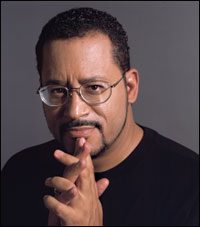
Michael Eric Dyson Puts It Down
SEE VIDEO HERE
Author and cultural critic Michael Eric Dyson talked about his body of writing, the legacy of Dr. Martin Luther King, Jr., and the presidential candidacy of Senator Barack Obama and the Reverend Jeremiah Wright. Professor Dyson talked about issues such as the role of the church in black culture. He discussed the problem of black people who excel being considered exceptions while those who do unacceptable things being considered part of the norm. Professor Dyson reacted to a video clip of John McWhorter from March 2, 2008, talking about hip hop. He also responded to a video clip from July 1, 2004, of Bill Cosby talking about personal responsibility. He responded to telephone calls and electronic mail.
Wednesday, April 09, 2008
Monday, April 07, 2008
The Church of Oprah Exposed
OBM:For thoes who call themselves Christians....If this is not enough I do not know what is!!!! People.....Ladies.....Sista's....Please wake up!!!!
Wednesday, April 02, 2008
Jesse Ventura ...Nails It!!!!!
Jesse Ventura Part 1
Jesse Ventura Part 2
Jesse Ventura Part 3
Jesse Ventura Part 4
Jesse Ventura Part 5
Tuesday, April 01, 2008
Bill Moyers Journal on Race, Part 1, with former Senator Fred Harris (3/28/08)
OBM: Part 1 of this (GREAT) show, which focuses on racism over the years, giving a history whites would all do well to familiarize themselves with. One of the few real attempts that the U.S. government made to really look at and learn the destructive power of their racism. Unfortunately it came only after wide spread violence and years of horrible poverty. The problem is that after white people looked at what they had created as a country they quickly began to reinstitute the racist laws and practices that continued these problems during the Reagan years. I am a beneficiary of the racism atonement programs that were started after the Kerner report. My father was able to get a family sustaining wage job and our family flourished. My siblings I and received a much superior education than our parents. Being the youngest I received the best education of my siblings. Because of our education, free lunch programs, and even bussing (which became assimilation programs that I oppose) we all have been able to more easily build professional careers and maintain financial stability with our families. My point...while slow...the racial atonement programs did work and instead of ending them they should of continued and be enhanced, and not have been eliminated or become under funded, corruptly managed, or hollow political campaign speak.